Latest Articles & Insights
Discover cutting-edge breakthroughs in contactless vital intelligence, preventive healthcare, and wellness technology.
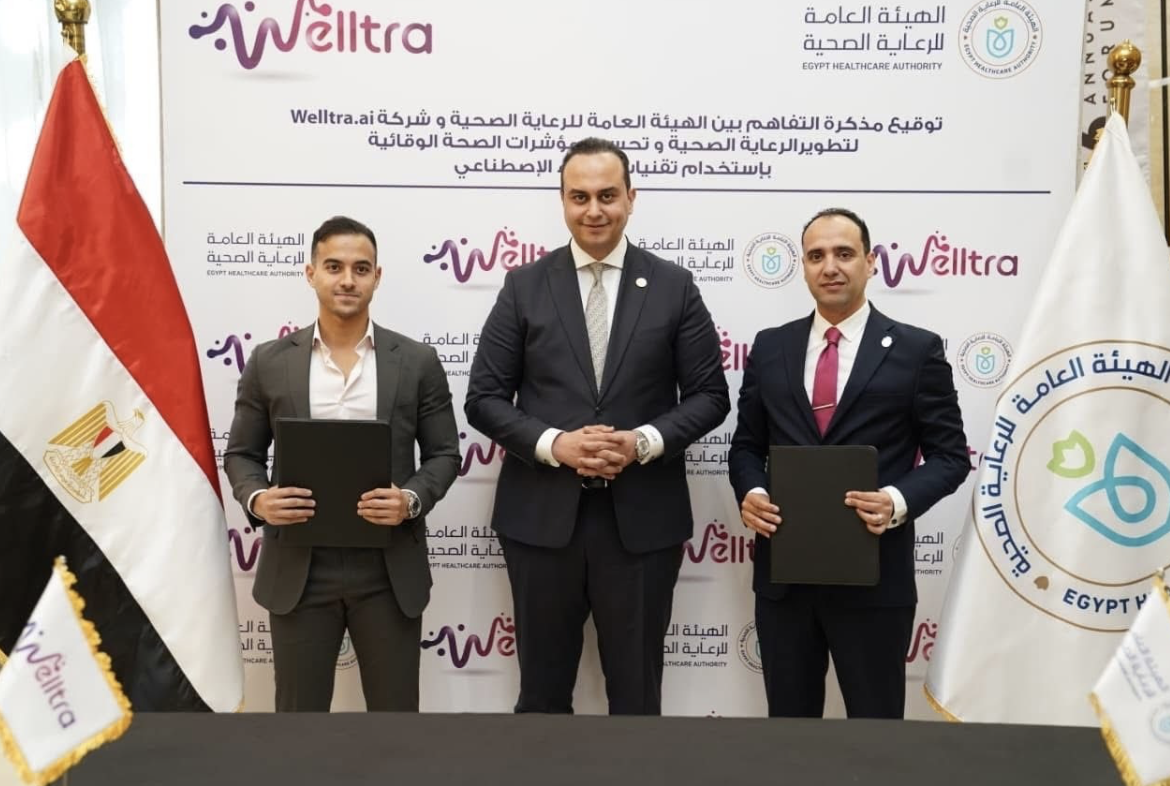
MOU Signing with EHA - Egyptian Healthcare Authority
Welltra signs an MOU with EHA - Egyptian Healthcare Authority! With a goal of supporting digital transformation and supporting cost cutting programs, Welltra will enable the mass screening of Egyptians and identifying high risk profiles in order to speed up the process of giving them the care they need. Welltra will also undergo a study with EHA to validate its technology on local population
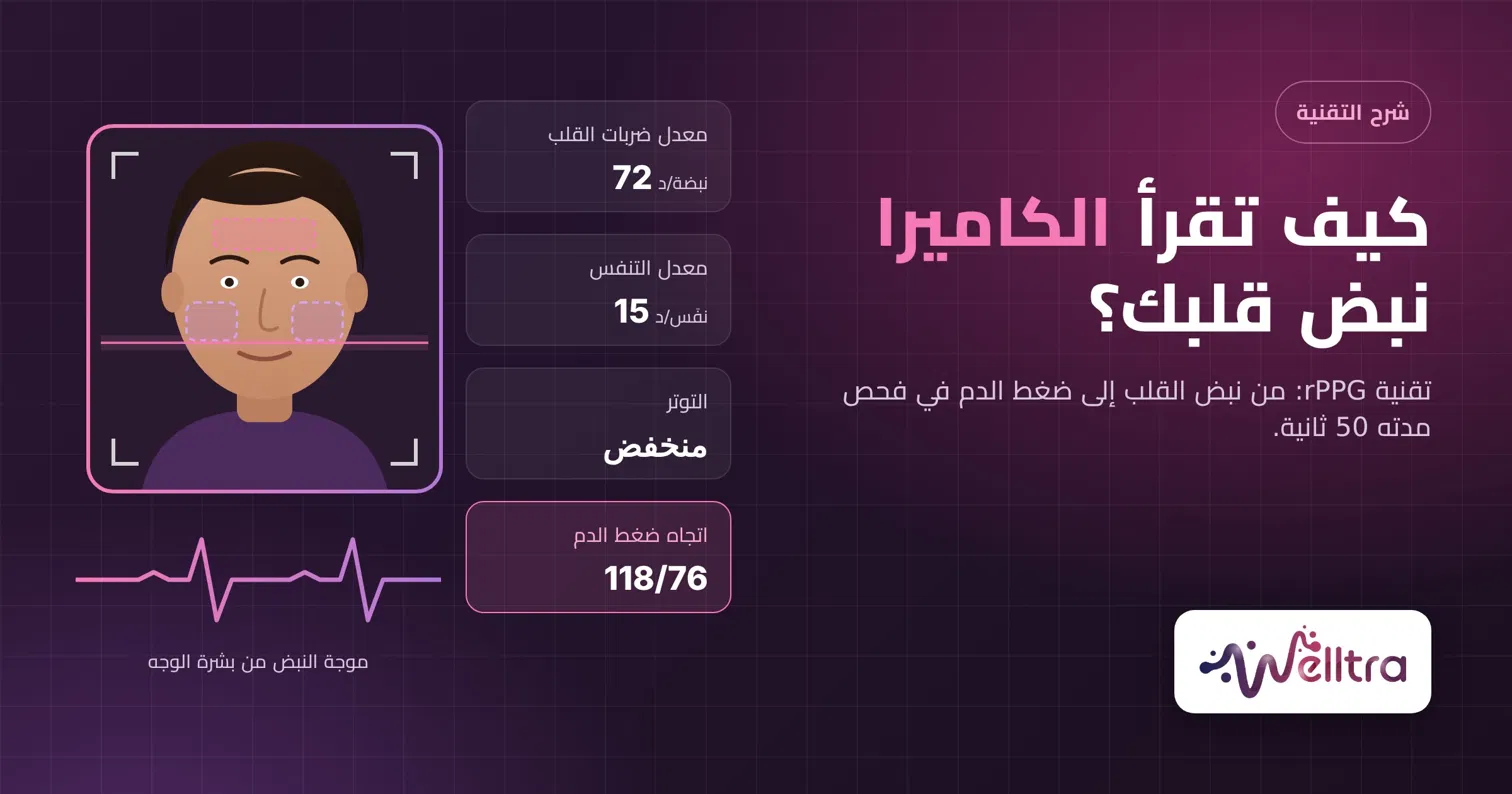
كيف تقيس كاميرا هاتفك علاماتك الحيوية؟ شرح تقنية rPPG
تقنية rPPG أو “التخطيط الضوئي للحجم عن بُعد” تقيس علاماتك الحيوية بكاميرا عادية، دون أن يلمس جسمك أي جهاز. مع كل نبضة قلب يتدفق الدم إلى وجهك، فيتغيّر لون بشرتك تغيّرًا لا تراه العين، لكن الكاميرا تلتقطه. ومن هذه الإشارة الصغيرة يستخرج الذكاء الاصطناعي معدل ضربات القلب ومعدل التنفس والتوتر، بل واتجاه ضغط الدم. مع Welltra يستغرق ذلك 50 ثانية فقط أمام هاتفك. هل هذه تقنية جديدة؟ الفكرة نفسها مستخدمة في المستشفيات منذ عقود. فجهاز قياس النبض الذي يُوضع على إصبعك في العيادة يعمل بالمبدأ ذاته: يُسلّط ضوءًا على الجلد ويقيس كيف يتغيّر حجم الدم مع كل نبضة. الجديد في rPPG أنها تفعل ذلك عن بُعد، بضوء الغرفة وكاميرا الهاتف، وهذا ما أصبح ممكنًا بفضل الذكاء الاصطناعي. كيف يتم الفحص خلال 50 ثانية؟ تجلس أمام الكاميرا الأمامية في إضاءة جيدة وتبقى ثابتًا. يحدد البرنامج مناطق من الوجه غنية بالأوعية الدموية، مثل الجبهة والوجنتين. يرصد التغيّرات الدقيقة في اللون إطارًا بإطار، خاصة في اللون الأخضر الذي يمتصه الهيموجلوبين أكثر من غيره. ينقّي الذكاء الاصطناعي الإشارة من أثر الحركة وتغيّر الإضاءة، فتظهر “موجة النبض” نفسها التي يراها الطبيب على شاشات المراقبة. تُحلَّل هذه الموجة، فتظهر القراءات على الشاشة خلال ثوانٍ. ويتم القياس على الهاتف نفسه، فلا تُحفظ صور لوجهك ولا يحتاج الفحص إلى اتصال بالإنترنت. كيف يُستخرج كل مؤشر من موجة النبض؟ معدل ضربات القلب: يُحسب من عدد النبضات في الدقيقة. وهو أقوى قياسات rPPG وأكثرها دقة، وقد حصلت التقنية التي تعتمد عليها Welltra على تصريح إدارة الغذاء والدواء الأمريكية FDA 510(k) لقياس معدل ضربات القلب من الفيديو. معدل التنفس: كل نفَس يغيّر إيقاع النبض بشكل بطيء ومنتظم، ويرصد البرنامج هذا الإيقاع ليحسب عدد الأنفاس. وهو أيضًا مبني على تقنية حاصلة على تصريح FDA 510(k)، بدقة ضمن نفَسين في الدقيقة في الاختبارات تغيّر معدل ضربات القلب والتوتر: القلب السليم لا ينبض كالساعة، بل تتفاوت المسافات بين النبضات قليلًا. وهذا التفاوت يعكس حالة الجهاز العصبي، فينخفض مع التوتر والإرهاق ويرتفع مع الراحة واللياقة. ضغط الدم: هنا تظهر قوة الذكاء الاصطناعي. فموجة النبض لا تحمل عدد النبضات فقط، بل تحمل شكلها أيضًا. عندما يرتفع الضغط وتصبح الشرايين أكثر صلابة، تتغيّر سرعة ارتفاع الموجة وشكل انخفاضها وتوقيت وصولها إلى مناطق مختلفة من الوجه. تدرّبت نماذج الذكاء الاصطناعي على آلاف القراءات المأخوذة بالتزامن من الكاميرا وجهاز الضغط التقليدي، فتعلّمت الربط بين شكل الموجة وقيمة الضغط، مع مراعاة عوامل مثل العمر والطول والوزن. ما مدى دقة قياس ضغط الدم بالكاميرا؟ التقدم في هذا المجال سريع. في دراسة مختبرية مستقلة نُشرت عام 2024 لتقنية مماثلة، بلغ متوسط الفرق بين الكاميرا وجهاز الضغط 6.5 ملم زئبق للضغط الانقباضي و0.4 ملم زئبق فقط للضغط الانبساطي (JMIR Cardio). وهذه أرقام متوسطة، إذ تختلف الدقة من شخص لآخر، ولهذا تهم المعايرة. المعايرة تصنع الفرق. يمكنك معايرة Welltra بقراءة واحدة من جهاز الضغط المنزلي. بعدها يقارن النظام قراءاتك بنقطة البداية الخاصة بك أنت، فيصبح أدق في متابعة التغيّر لديك. وأهم ما يجب معرفته: قيمة قياس الضغط بالكاميرا في الاتجاه وليست في الرقم الواحد. فحص أسبوعي لمدة 50 ثانية يكشف بوضوح إن كان ضغطك يرتفع مع الوقت، بينما يبقى جهاز الضغط في الدرج. ولهذا تعرض Welltra ضغط الدم كمؤشر للعافية، وعندما يشير الاتجاه إلى الارتفاع تنبّهك للتأكد بجهاز الضغط ومراجعة الطبيب. وهذا بالضبط ما ينقذ الأرواح، لأن أكثر من نصف المصابين بارتفاع الضغط في منطقتنا لا يعرفون أنهم مصابون أصلًا (Lancet Global Health). ما الذي يؤثر في دقة الفحص؟ الإضاءة: ضوء أمامي متساوٍ هو الأفضل. تجنّب الضوء القوي من الخلف. الثبات: الحركة والكلام أثناء الفحص يشوّشان الإشارة. الراحة قبل الفحص: اجلس دقيقة بهدوء، كما تفعل قبل قياس الضغط بالجهاز. تكرار الفحص في وقت ثابت: الفحص في نفس الوقت كل أسبوع يجعل المقارنة أوضح. لماذا يغيّر هذا الرعاية الصحية؟ لأن الفحص الذي لا يحدث لا يكتشف شيئًا. الجهاز الذي يحتاجه الناس لفحص صحتهم موجود بالفعل في جيوبهم. لا شيء يُشحن أو يُلبس أو يُشترى، ولا موعد في عيادة. وهذا يفتح الباب أمام: الأسر: متابعة صحة الوالدين المسنين يوميًا من المنزل. الأطباء: رؤية العلامات الحيوية أثناء الاستشارة عن بُعد، وتنبيه تلقائي عند خروج القراءات عن النطاق المحدد. أصحاب العمل وشركات التأمين: فحص آلاف الأشخاص بسرعة ودون معدات. الصيدليات والعيادات: فحص أولي سريع قبل الاستشارة. الأسئلة الشائعة ما هي تقنية rPPG؟ تقنية تقيس العلامات الحيوية من التغيّرات الدقيقة في لون البشرة مع كل نبضة قلب، باستخدام كاميرا عادية والذكاء الاصطناعي. هل يمكن قياس ضغط الدم بكاميرا الهاتف؟ نعم، كمؤشر للعافية يُظهر اتجاه ضغطك مع الوقت. وتزداد دقته بالمعايرة بجهاز الضغط المنزلي. وللتشخيص يُعتمد دائمًا على جهاز الضغط والطبيب. هل التقنية معتمدة؟ تقيس Welltra معدل ضربات القلب ومعدل التنفس بتقنية حاصلة على تصريح FDA 510(k). أما ضغط الدم والمؤشرات الأخرى فهي مؤشرات للعافية. هل الفحص آمن؟ نعم. الكاميرا تسجّل فقط، ولا شيء يلمس جسمك، ولا تُحفظ صور لوجهك. كم يستغرق الفحص؟ 50 ثانية. هل يؤثر لون البشرة في النتيجة؟ قد يؤثر، لأن البشرة الداكنة تمتص ضوءًا أكثر. ولهذا تُدرَّب النماذج الجيدة على ألوان بشرة متنوعة، وهذا مهم لسكان العالم العربي. تقيس Welltra معدل ضربات القلب ومعدل التنفس بتقنية حاصلة على تصريح FDA 510(k). أما القراءات الأخرى، ومنها ضغط الدم، فهي مؤشرات للعافية ولا تغني عن التشخيص الطبي المتخصص.
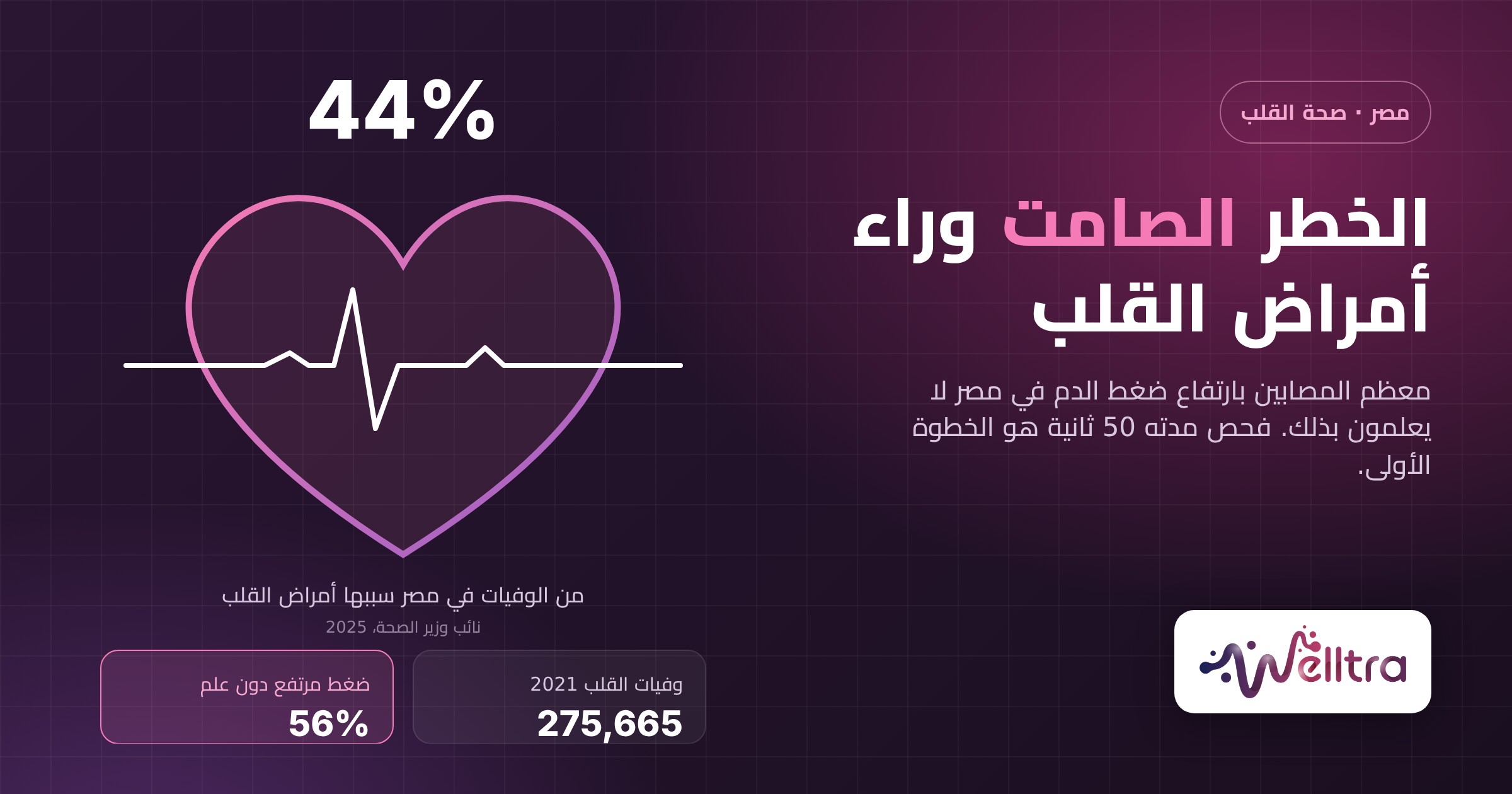
ارتفاع ضغط الدم وأمراض القلب في مصر: لماذا ينقذ الفحص المبكر الأرواح
أمراض القلب والأوعية الدموية هي السبب الأول للوفاة في مصر، إذ تتسبب في 44% من إجمالي الوفيات، ويُعد ارتفاع ضغط الدم من أهم أسبابها. وأكثر من نصف المصريين المصابين بارتفاع ضغط الدم لا يعلمون بإصابتهم. والفحص المنتظم هو أبسط طريقة لتغيير ذلك، ويمكن لفحص للوجه مدته 50 ثانية عبر الهاتف الذكي أن يجعل الفحص الأول سهلًا بما يكفي لتكراره كل أسبوع. ما مدى خطورة أمراض القلب في مصر؟ تتحمل مصر أحد أثقل أعباء أمراض القلب في المنطقة. فالأمراض غير المعدية مسؤولة عن 80% من الوفيات في البلاد، وتستحوذ أمراض القلب والأوعية الدموية وحدها على 44% منها، وفقًا لنائب وزير الصحة الدكتور عمرو قنديل (Daily News Egypt). وفي عام 2021 سجلت مصر 275,665 حالة وفاة بسبب أمراض القلب والأوعية الدموية، وهو أعلى رقم بين دول الشرق الأوسط (Arab News). ووراء هذا الرقم نوبات قلبية وسكتات دماغية تصيب كثيرين في الأربعينيات والخمسينيات من العمر، في ذروة عطائهم في العمل والأسرة. ما مدى انتشار ارتفاع ضغط الدم في مصر؟ يعاني نحو 26% من البالغين في مصر من ارتفاع ضغط الدم، وفقًا للمسح الصحي المصري. والأكثر لفتًا للانتباه أن 56% من المصابين لم يكونوا يعلمون بإصابتهم (Lancet Global Health). نادرًا ما يسبب ارتفاع ضغط الدم أعراضًا. يشعر معظم المصابين بأنهم بخير تمامًا بينما يُلحق الضغط المرتفع الضرر بالشرايين والقلب والكلى والمخ ببطء. ولا يكتشف كثيرون الأمر إلا بعد نوبة قلبية أو سكتة دماغية، حين يكون الضرر قد وقع بالفعل. ولهذا يسميه الأطباء “القاتل الصامت”. ويزيد السكري الصورة سوءًا. إذ يعيش نحو 13.2 مليون بالغ في مصر مع مرض السكري، و62% منهم لم يُشخَّصوا بعد (IDF Diabetes Atlas). واجتماع السكري وارتفاع الضغط يضاعف خطر الإصابة بأمراض القلب. هل يمكن الوقاية من أمراض القلب؟ نعم، في معظم الحالات. يقدّر الاتحاد العالمي للقلب أن 80% من وفيات أمراض القلب والأوعية الدموية يمكن الوقاية منها (Arab News). وفي المؤتمر نفسه بالقاهرة عام 2025، استشهد الدكتور أحمد السبكي، رئيس الهيئة العامة للرعاية الصحية، بتقديرات منظمة الصحة العالمية بأن الوقاية قد تمنع ما يصل إلى 82% من الحالات (Daily News Egypt). تبدأ الوقاية بمعرفة أرقامك. وأهم عوامل الخطر التي يمكنك التحكم فيها: ارتفاع ضغط الدم: أهمها على الإطلاق، وأسهلها علاجًا متى اكتُشف. السكري وارتفاع سكر الدم: يضران الأوعية الدموية مع الوقت. التدخين: بما في ذلك الشيشة المنتشرة في مصر. زيادة الوزن وقلة الحركة: كلاهما يرفع ضغط الدم وسكر الدم. الإفراط في الملح: الملح يرفع ضغط الدم مباشرة. التوتر وقلة النوم: يُبقيان القلب تحت ضغط مستمر. إنقاص الوزن وتقليل الملح والإقلاع عن التدخين والمشي 30 دقيقة يوميًا، كلها تخفض ضغط الدم. وعندما لا تكفي تغييرات نمط الحياة، فإن أدوية الضغط فعالة ومتوفرة على نطاق واسع. لكن لا شيء من ذلك يبدأ قبل اكتشاف المشكلة. لماذا لا يُجري المزيد من الناس الفحص؟ لا يزور معظم الناس الطبيب إلا عند الشعور بالمرض، وارتفاع ضغط الدم لا يُشعرك بالمرض. كما أن زيارة العيادة تستغرق وقتًا، والطوابير طويلة، والفحص الروتيني نادرًا ما يبدو عاجلًا. وقراءة واحدة في السنة، إن حدثت، لا تكشف كيف يتغير الضغط مع مرور الوقت. كيف يساعد فحص للوجه مدته 50 ثانية؟ يحوّل Welltra الهاتف الذكي إلى أداة فحص صحي أولي. ينظر الشخص إلى الكاميرا الأمامية لمدة 50 ثانية. وباستخدام تقنية التخطيط الضوئي عن بُعد (rPPG)، تلتقط الكاميرا تغيرات دقيقة في لون بشرة الوجه مع كل نبضة قلب، ثم يحوّل الذكاء الاصطناعي هذه الإشارة إلى قراءات. يقيس Welltra معدل ضربات القلب ومعدل التنفس بتقنية حاصلة على تصريح إدارة الغذاء والدواء الأمريكية (FDA 510(k)). كما يعرض مؤشرات للعافية، منها اتجاه ضغط الدم وتغيّر معدل ضربات القلب ومستوى التوتر. هذه المؤشرات لا تحل محل جهاز قياس الضغط، ودورها أن تنبّه إلى أي تغيّر وتدعو إلى قياس دقيق. تكمن القيمة في إمكانية تكرار الفحص. فجهاز قياس الضغط يبقى غالبًا في الدرج، أما الهاتف فهو دائمًا في اليد. والفحص الأسبوعي يكوّن صورة واضحة عن صحة القلب على مدى شهور. وعندما تخرج القراءات عن النطاق الصحي، يوصي Welltra بزيارة الطبيب، الذي يؤكد القراءة بجهاز الضغط ويبدأ العلاج. على الهاتف، يتم القياس على الجهاز نفسه ويعمل دون اتصال بالإنترنت. ولا تُحفظ أي صور للوجه. أين يمكن أن يساعد ذلك في مصر؟ يمكن للصيدليات تقديم فحص مجاني عند الشباك وإحالة من تظهر لديهم قراءات مقلقة. ويمكن لوحدات طب الأسرة ضمن منظومة التأمين الصحي الشامل، التي تخدم بالفعل أكثر من 6.2 مليون مواطن (Ahram Online)، فحص المرضى عند التسجيل. ويمكن لأصحاب العمل تنظيم فحوصات لأعداد كبيرة من الموظفين. ويمكن للأسر متابعة صحة الوالدين المسنين في المنزل ومشاركة النتائج مع طبيبهم. الأسئلة الشائعة ما نسبة الوفيات في مصر الناتجة عن أمراض القلب؟ نحو 44%، وفقًا لنائب وزير الصحة المصري عام 2025. والأمراض غير المعدية مجتمعة مسؤولة عن 80% من الوفيات. كم عدد المصريين المصابين بارتفاع ضغط الدم؟ نحو 26% من البالغين، وأكثر من نصفهم لا يعلمون بإصابتهم. ما أعراض ارتفاع ضغط الدم؟ غالبًا لا توجد أعراض. قد يشعر البعض بصداع أو دوخة أو زغللة في الرؤية، لكن معظم المصابين يشعرون بأنهم طبيعيون. الطريقة الوحيدة للمعرفة هي الفحص. هل يمكن للهاتف قياس ضغط الدم؟ يعرض Welltra اتجاه ضغط الدم كمؤشر للعافية وليس كتشخيص. إذا كان الاتجاه مرتفعًا، فتأكد بجهاز قياس الضغط وراجع الطبيب. كم مرة يجب أن أفحص صحة قلبي؟ ينبغي لمن تجاوزوا الأربعين، أو المصابين بالسكري أو زيادة الوزن أو من لديهم تاريخ عائلي لأمراض القلب، الفحص بانتظام. والفحص الأسبوعي مع Welltra يستغرق 50 ثانية. يقيس Welltra معدل ضربات القلب ومعدل التنفس بتقنية حاصلة على تصريح FDA 510(k). أما القراءات الأخرى، ومنها اتجاه ضغط الدم، فهي مؤشرات للعافية ولا تغني عن التشخيص الطبي المتخصص. إذا شعرت بألم في الصدر أو ضعف مفاجئ أو صعوبة في الكلام، اتصل بالإسعاف على الرقم 123 فورًا.

Hypertension and Heart Disease in Egypt: Why Early Checks Save Lives
Cardiovascular disease is the leading cause of death in Egypt, responsible for 44% of all deaths, and high blood pressure is one of its biggest drivers. More than half of Egyptians with hypertension don’t know they have it. Regular checks are the simplest way to change that, and a 50-second face scan on a smartphone can make the first check easy enough to do every week. How serious is heart disease in Egypt? Egypt carries one of the heaviest heart disease burdens in the region. Non-communicable diseases cause 80% of deaths in the country, and cardiovascular conditions alone account for 44%, according to Deputy Health Minister Dr. Amr Kandil (Daily News Egypt). In 2021, Egypt recorded 275,665 deaths from cardiovascular disease, the highest number of any country in the Middle East (Arab News). Behind that number are heart attacks and strokes that often strike people in their forties and fifties, at the height of their working and family lives. How common is high blood pressure in Egypt? About 26% of Egyptian adults have hypertension, according to the Egyptian Health Issues Survey. More striking, 56% of the people who had it were unaware (Lancet Global Health). High blood pressure rarely causes symptoms. Most people feel completely well while it slowly damages the arteries, heart, kidneys and brain. Many only find out after a heart attack or stroke, when the damage is already done. That is why doctors call it the silent killer. Diabetes makes the picture worse. About 13.2 million Egyptian adults live with diabetes, and 62% of them are undiagnosed (IDF Diabetes Atlas). Diabetes and hypertension together multiply the risk of heart disease. Can heart disease be prevented? Yes, in most cases. The World Heart Federation estimates that 80% of cardiovascular deaths are preventable (Arab News). At the same 2025 conference in Cairo, Dr. Ahmed El-Sobky, chairman of Egypt’s General Authority for Healthcare, cited World Health Organization estimates that prevention could avert up to 82% of cases (Daily News Egypt). Prevention starts with knowing your numbers. The main risk factors you can act on are: High blood pressure: the most important one, and the easiest to treat once it’s found. Diabetes and high blood sugar: they damage blood vessels over time. Smoking: including shisha, which is common in Egypt. Excess weight and inactivity: both raise blood pressure and blood sugar. Diet high in salt: salt raises blood pressure directly. Stress and poor sleep: they keep the heart under constant strain. Losing weight, cutting salt, stopping smoking and walking for 30 minutes a day all lower blood pressure. When lifestyle changes aren’t enough, blood pressure medicines are effective and widely available. None of it can start until the problem is found. Why don’t more people get checked? Most people only visit a doctor when they feel ill, and high blood pressure doesn’t make you feel ill. Clinic visits take time, queues are long, and a routine check rarely feels urgent. One reading a year, if that, also misses how blood pressure changes over time. How can a 50-second face scan help? Welltra turns a smartphone into a first health check. The person looks at the front camera for 50 seconds. Using remote photoplethysmography (rPPG), the camera picks up tiny color changes in the skin of the face with each heartbeat, and AI turns that signal into readings. Welltra measures heart rate and respiratory rate with FDA 510(k)-cleared technology. It also shows wellness indicators, including a blood pressure trend, heart rate variability and stress. These indicators don’t replace a blood pressure cuff. Their job is to show when something has changed and prompt a proper measurement. The value is in how often people can check. A cuff stays in a drawer, but a phone is always in hand. A weekly scan builds a picture of a person’s heart health over months. When readings move outside healthy ranges, Welltra recommends a visit to a doctor, who confirms with a cuff and starts treatment. On mobile, the measurement runs on the phone itself and works without an internet connection. No facial images are stored. Where can this help in Egypt? Pharmacies can offer a free check at the counter and refer people with worrying readings. Family medicine units under the Universal Health Insurance System, which already serves more than 6.2 million people (Ahram Online), can screen patients at registration. Employers can run screening for large workforces. Families can check on older parents at home and share the results with their doctor. FAQ What percentage of deaths in Egypt are caused by heart disease? About 44%, according to Egypt’s Deputy Health Minister in 2025. Non-communicable diseases as a whole cause 80% of deaths. How many Egyptians have high blood pressure? About 26% of adults, and more than half of them don’t know it. What are the symptoms of high blood pressure? Usually none. Some people get headaches, dizziness or blurred vision, but most feel normal. The only way to know is to check. Can a phone measure blood pressure? Welltra shows a blood pressure trend as a wellness indicator, not a diagnosis. If the trend is high, confirm it with a cuff and see a doctor. How often should I check my heart health? Adults over 40, or anyone with diabetes, excess weight or a family history of heart disease, should check regularly. A weekly scan with Welltra takes 50 seconds. Welltra’s heart rate and respiratory rate use FDA 510(k)-cleared technology. Other readings, including the blood pressure trend, are wellness indicators and are not a substitute for professional medical diagnosis. If you have chest pain, sudden weakness or trouble speaking, call 123 for an ambulance immediately.
Saudi Arabia's Undiagnosed Health Gap, and How Contactless Screening Can Close It
In Saudi Arabia, more than half of adults with high blood pressure and over 40% of adults with diabetes have never been diagnosed. These figures come from national survey data reviewed by Midhet and colleagues (Int J Health Sci). The conditions are common, silent and treatable. The gap is in finding people early enough. How many Saudis have undiagnosed hypertension and diabetes? Condition Prevalence, men Prevalence, women Undiagnosed, men Undiagnosed, women Hypertension 17.7% 12.5% 61.2% 52.9% Diabetes 14.8% 11.7% 40.2% 48.4% Source: Saudi Health Interview Survey data, summarised in Midhet et al. Rates climb sharply with age. Among adults aged 55 to 64, nearly half have hypertension and roughly half have diabetes (same source). In Riyadh specifically, the Riyadh Cohort study put age-adjusted hypertension prevalence at 32.6% (Al-Daghri et al.). The wider GCC faces the same pattern. Saudi Arabia, Kuwait and Qatar all rank among the world’s ten highest countries for diabetes prevalence (Dove Medical Press). Why do so many cases go undiagnosed? The researchers point to a failure of screening at the primary care level, not a lack of hospitals. Saudi Arabia runs more than 2,300 primary health care centres, but people only visit them when they feel unwell. Hypertension and early type 2 diabetes rarely cause symptoms. Common barriers: No symptoms, no visit. People don’t book a check-up when they feel fine. Time. A clinic visit for a routine check can take half a day. Equipment. Screening at scale needs cuffs, glucometers and staff at every site. Follow-up. One reading is a snapshot. Trends need regular measurement. How can contactless screening help? Contactless screening brings the first check to where people already are: their phone, their workplace, a pharmacy or a mall kiosk. A camera-based scan using rPPG takes under a minute and needs no trained operator. It works as a first filter, not a diagnosis: A person scans their face on a phone, kiosk or smart mirror. The platform reads heart rate, breathing rate, heart rate variability and a blood pressure estimate. Results outside healthy ranges trigger a recommendation to see a clinician. A doctor confirms with a standard cuff or blood test and starts care. Repeat scans track the trend over weeks and months. Because step 1 is free and fast, many more people reach step 4. That is the gap the national data describes. Camera-based blood pressure is still maturing, so Welltra treats it as a screening indicator rather than a diagnostic value. Multimodal screening helps here. Welltra pairs rPPG with AI-guided urinalysis, which can flag markers such as glucose in urine that warrant a diabetes test. How does this fit Saudi Vision 2030? The Health Sector Transformation Program under Vision 2030 shifts the system from treatment toward prevention, with a goal of earlier detection of chronic disease. Digital, scalable screening is one of the few tools that can reach millions of people without building new clinics. FAQ What percentage of Saudis have high blood pressure? National survey data show 17.7% of men and 12.5% of women, rising to nearly half of adults aged 55 to 64. Can a phone camera detect diabetes? No, not on its own. A camera scan reads cardiovascular signals. Welltra adds AI-guided urinalysis, which can flag markers that suggest a blood test is needed. Where can I get a free health screening in Saudi Arabia? Primary health care centres run by the Ministry of Health offer screening. Digital tools like Welltra let you run a first check at home in 40 seconds. How often should adults in Saudi Arabia check their blood pressure? At least once a year from age 18, and more often if you are over 40, overweight or have a family history. Follow your doctor’s advice. Welltra provides wellness indicators and is not a substitute for professional medical diagnosis.
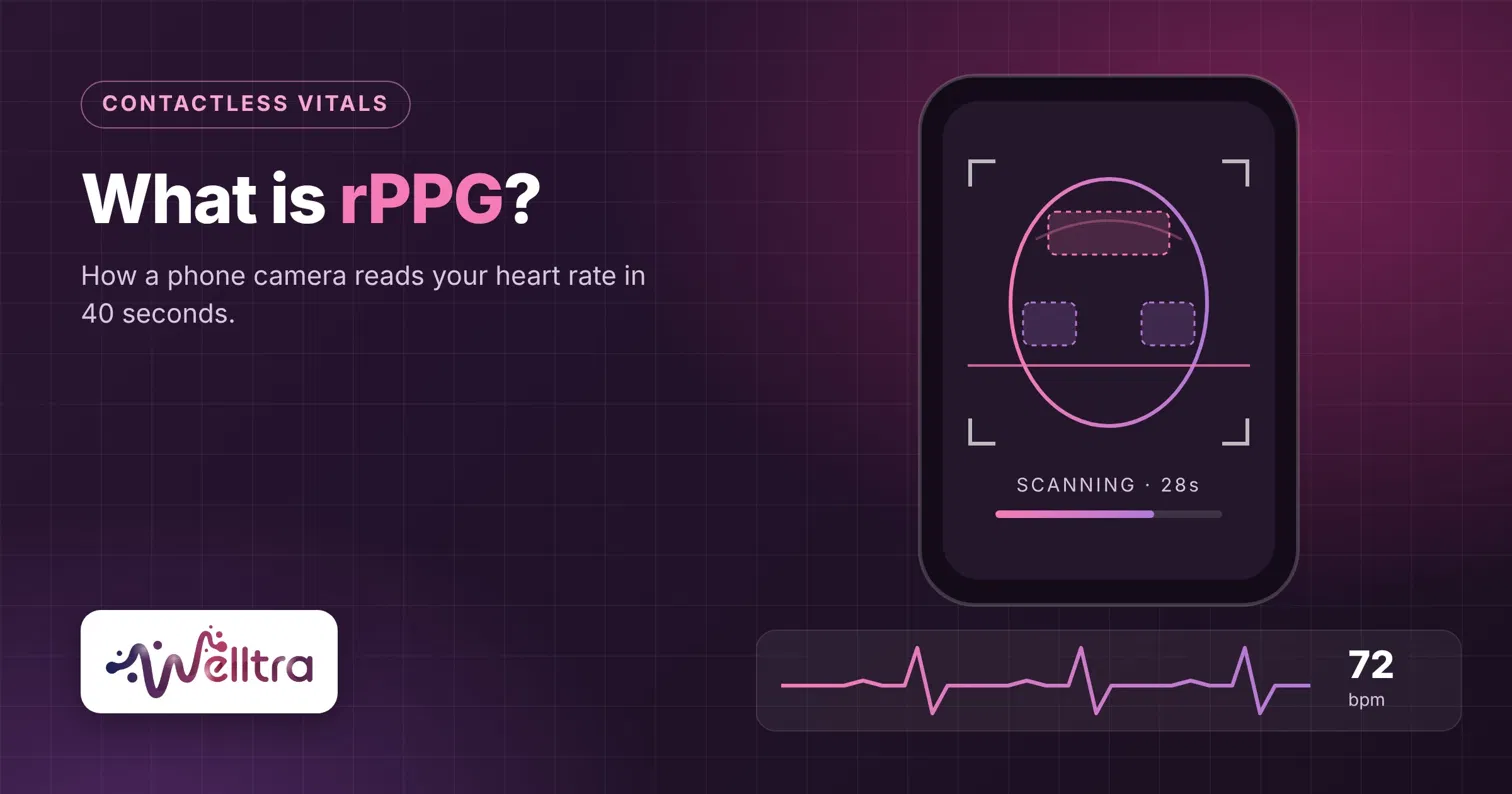
What Is rPPG? How Your Phone Camera Can Measure Your Vital Signs
Remote photoplethysmography (rPPG) is a way to measure vital signs using an ordinary camera. Every heartbeat pushes blood into the skin of your face, which changes how much light the skin absorbs. The change is too small for the eye to see, but a camera picks it up. AI turns that signal into heart rate, breathing rate, heart rate variability and other wellness indicators, with no wearable or cuff. With Welltra, a scan takes 50 seconds on a phone, tablet, kiosk or smart mirror. How does rPPG work? rPPG builds on the same principle as the pulse oximeter clipped to your finger at a clinic. That device shines light through skin and tracks how blood volume changes with each beat. rPPG does the same thing remotely, using ambient light and a camera. The camera records a short video of your face. Software locks onto skin regions with strong blood flow, such as the forehead and cheeks. It tracks tiny colour changes in each frame, mainly in the green channel, where haemoglobin absorbs light most. AI models clean out noise from movement and lighting, then extract the pulse wave. The pulse wave is analysed for rate, rhythm and shape, which yields the vital-sign estimates. Why does contactless screening matter? Most people do not get checked often enough. Fewer than 10% of US adults aged 35 and over receive all recommended preventive care (USC Marshall). Any device with a camera can now act as a screening point, which removes cost, hardware and travel from the equation. That opens uses that cuffs and wearables can’t reach: Telehealth: clinicians see vitals during a video consult. Remote patient monitoring: doctors follow patients from a mobile app and are prompted when readings fall outside set ranges. Elderly care: daily scans at home, logged automatically, without devices to charge or wear. Workplaces and insurers: kiosk check-ins and app-based screening at population scale. Clinics: faster triage in waiting rooms with no shared equipment to sanitise. How is Welltra using rPPG? Welltra is a contactless, multimodal health screening platform built for the world. It combines rPPG vital signs with voice biomarkers and AI-guided urinalysis, so one session covers more than any single sensor. Welltra runs on smartphones, kiosks and Ru’ya, its smart mirror, and partners with health authorities in Saudi Arabia and the UAE. FAQ Is rPPG safe? Yes. It only records video with a normal camera. Nothing touches the body and no radiation is emitted. Do I need a special camera? No. A modern smartphone or webcam works. Even, front-facing light improves results. Can rPPG replace a doctor’s measurement? No. It’s a screening and tracking tool. Abnormal readings should be confirmed with a clinician. How long does an rPPG scan take? Research protocols use 20 to 60 seconds. A Welltra scan takes 50 seconds. Does skin tone affect rPPG? It can, because darker skin absorbs more light. Good models are trained on diverse skin tones, which matters for GCC and South Asian populations. Welltra provides wellness indicators and is not a substitute for professional medical diagnosis.