Hypertension and Heart Disease in Egypt: Why Early Checks Save Lives

Cardiovascular disease is the leading cause of death in Egypt, responsible for 44% of all deaths, and high blood pressure is one of its biggest drivers. More than half of Egyptians with hypertension don’t know they have it. Regular checks are the simplest way to change that, and a 50-second face scan on a smartphone can make the first check easy enough to do every week.
How serious is heart disease in Egypt?
Egypt carries one of the heaviest heart disease burdens in the region. Non-communicable diseases cause 80% of deaths in the country, and cardiovascular conditions alone account for 44%, according to Deputy Health Minister Dr. Amr Kandil (Daily News Egypt).
In 2021, Egypt recorded 275,665 deaths from cardiovascular disease, the highest number of any country in the Middle East (Arab News). Behind that number are heart attacks and strokes that often strike people in their forties and fifties, at the height of their working and family lives.
How common is high blood pressure in Egypt?
About 26% of Egyptian adults have hypertension, according to the Egyptian Health Issues Survey. More striking, 56% of the people who had it were unaware (Lancet Global Health).
High blood pressure rarely causes symptoms. Most people feel completely well while it slowly damages the arteries, heart, kidneys and brain. Many only find out after a heart attack or stroke, when the damage is already done. That is why doctors call it the silent killer.
Diabetes makes the picture worse. About 13.2 million Egyptian adults live with diabetes, and 62% of them are undiagnosed (IDF Diabetes Atlas). Diabetes and hypertension together multiply the risk of heart disease.
Can heart disease be prevented?
Yes, in most cases. The World Heart Federation estimates that 80% of cardiovascular deaths are preventable (Arab News). At the same 2025 conference in Cairo, Dr. Ahmed El-Sobky, chairman of Egypt’s General Authority for Healthcare, cited World Health Organization estimates that prevention could avert up to 82% of cases (Daily News Egypt).
Prevention starts with knowing your numbers. The main risk factors you can act on are:
- High blood pressure: the most important one, and the easiest to treat once it’s found.
- Diabetes and high blood sugar: they damage blood vessels over time.
- Smoking: including shisha, which is common in Egypt.
- Excess weight and inactivity: both raise blood pressure and blood sugar.
- Diet high in salt: salt raises blood pressure directly.
- Stress and poor sleep: they keep the heart under constant strain.
Losing weight, cutting salt, stopping smoking and walking for 30 minutes a day all lower blood pressure. When lifestyle changes aren’t enough, blood pressure medicines are effective and widely available. None of it can start until the problem is found.
Why don’t more people get checked?
Most people only visit a doctor when they feel ill, and high blood pressure doesn’t make you feel ill. Clinic visits take time, queues are long, and a routine check rarely feels urgent. One reading a year, if that, also misses how blood pressure changes over time.
How can a 50-second face scan help?
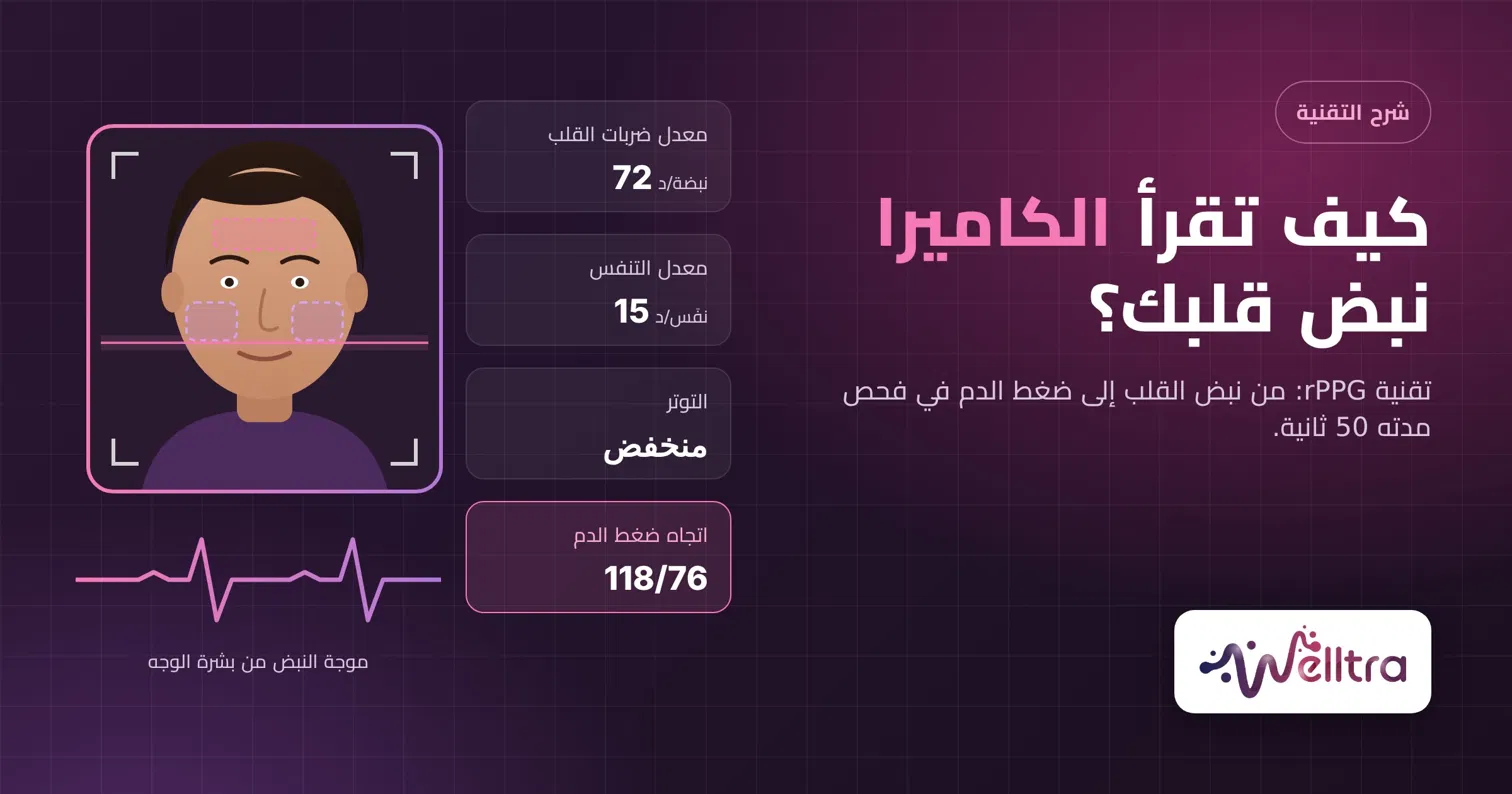
Welltra turns a smartphone into a first health check. The person looks at the front camera for 50 seconds. Using remote photoplethysmography (rPPG), the camera picks up tiny color changes in the skin of the face with each heartbeat, and AI turns that signal into readings.
Welltra measures heart rate and respiratory rate with FDA 510(k)-cleared technology. It also shows wellness indicators, including a blood pressure trend, heart rate variability and stress. These indicators don’t replace a blood pressure cuff. Their job is to show when something has changed and prompt a proper measurement.
The value is in how often people can check. A cuff stays in a drawer, but a phone is always in hand. A weekly scan builds a picture of a person’s heart health over months. When readings move outside healthy ranges, Welltra recommends a visit to a doctor, who confirms with a cuff and starts treatment.
On mobile, the measurement runs on the phone itself and works without an internet connection. No facial images are stored.
Where can this help in Egypt?
Pharmacies can offer a free check at the counter and refer people with worrying readings. Family medicine units under the Universal Health Insurance System, which already serves more than 6.2 million people (Ahram Online), can screen patients at registration. Employers can run screening for large workforces. Families can check on older parents at home and share the results with their doctor.
FAQ
What percentage of deaths in Egypt are caused by heart disease? About 44%, according to Egypt’s Deputy Health Minister in 2025. Non-communicable diseases as a whole cause 80% of deaths.
How many Egyptians have high blood pressure? About 26% of adults, and more than half of them don’t know it.
What are the symptoms of high blood pressure? Usually none. Some people get headaches, dizziness or blurred vision, but most feel normal. The only way to know is to check.
Can a phone measure blood pressure? Welltra shows a blood pressure trend as a wellness indicator, not a diagnosis. If the trend is high, confirm it with a cuff and see a doctor.
How often should I check my heart health? Adults over 40, or anyone with diabetes, excess weight or a family history of heart disease, should check regularly. A weekly scan with Welltra takes 50 seconds.
Welltra’s heart rate and respiratory rate use FDA 510(k)-cleared technology. Other readings, including the blood pressure trend, are wellness indicators and are not a substitute for professional medical diagnosis. If you have chest pain, sudden weakness or trouble speaking, call 123 for an ambulance immediately.